

 Tiếng Việt
Wyckoff in trading for traders
| Date: 21/03/2026 | 909 Views | Investment and Trading Academy |
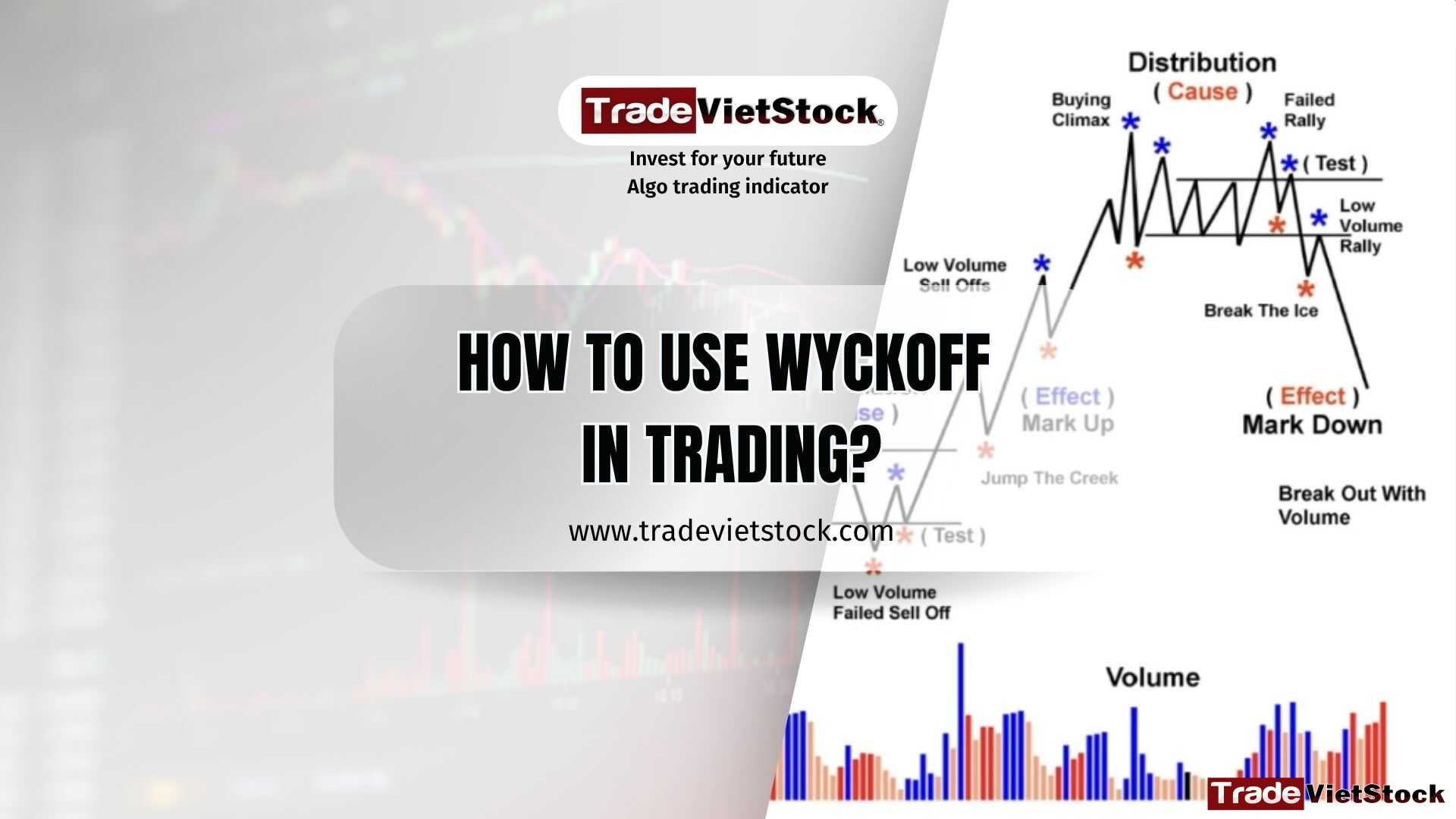
Wyckoff in trading for traders – Buy the dip and sell the high
Welcome to Tradevietstock. Today, we’re going to break down one of the most essential theories every trader and investor should understand: Wyckoff.
It may seem basic, but it’s fundamentally important because it teaches you how supply and demand truly work in the market. This concept applies across all asset classes, whether you’re trading stocks, crypto, metals, or forex CFDs. Now let’s learn how to use Wyckoff in trading for traders.
i. What is Wyckoff in trading?
Wyckoff in trading for traders is one of the four stages in the market cycle developed by Richard Wyckoff. The full cycle includes accumulation, markup, distribution, and markdown. Each phase reflects how large participants influence price direction.
The accumulation phase occurs when major players begin increasing their buying activity, gradually building positions. As demand rises, price starts forming higher lows and eventually breaks above the upper boundary of its trading range, transitioning into the markup phase.
In simple terms, accumulation leads to a sustained uptrend once the range is broken.
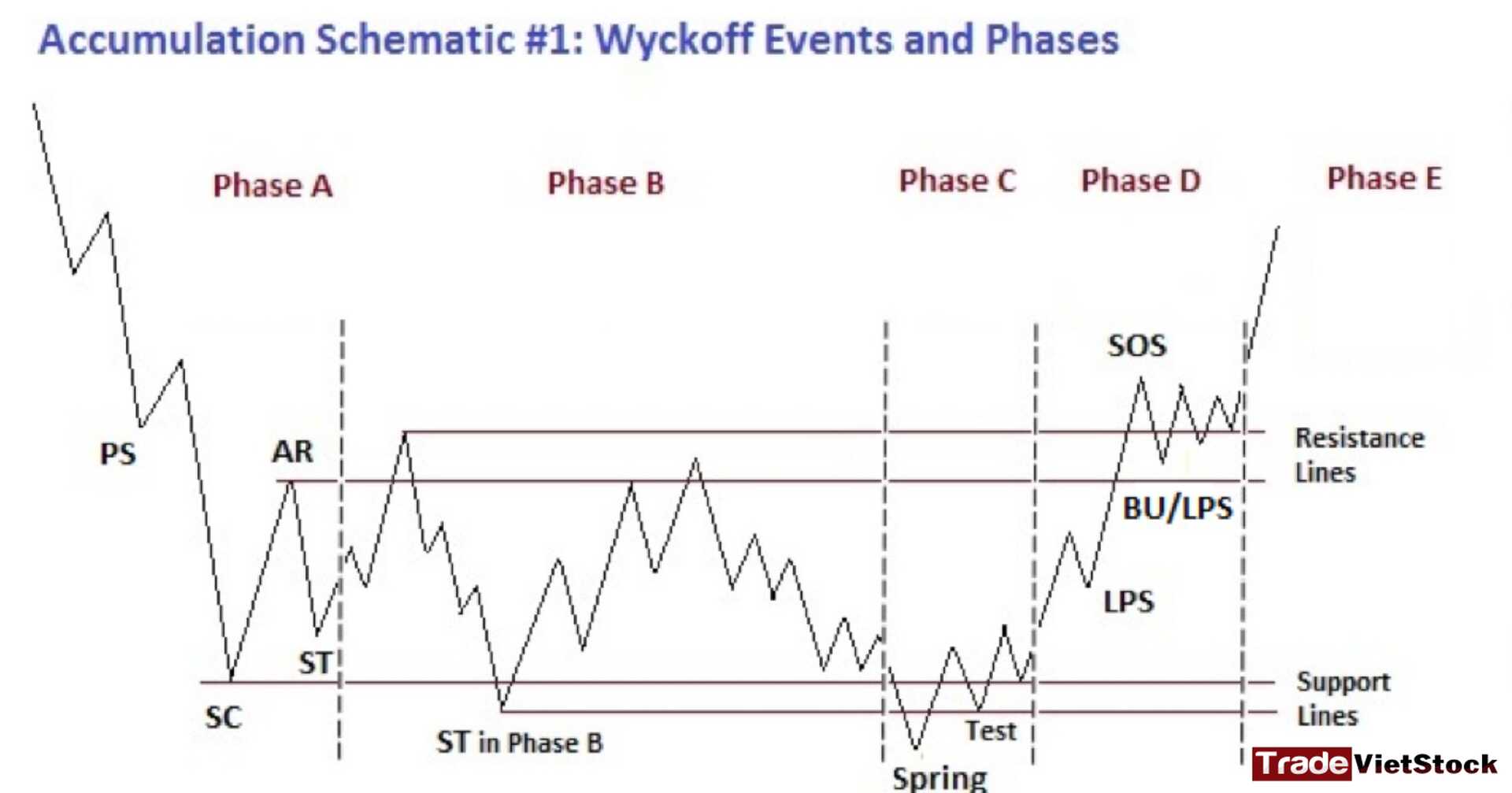
ii. Accumulation Events and Phases
During accumulation, institutional participants prepare for a bullish move by buying assets within a defined trading range (TR). As buying outweighs selling, available supply decreases, increasing the likelihood of a breakout above the range.
To analyze this process, traders often refer to the accumulation schematic introduced by Wyckoff in the 1930s.
Phase A marks the end of the prior downtrend. It begins with preliminary support (PS), where buying interest starts to appear alongside rising volume, signaling that selling pressure may be weakening.
This is followed by the selling climax (SC), where panic selling reaches its peak. At this point, large players absorb the selling pressure while short sellers begin closing positions.
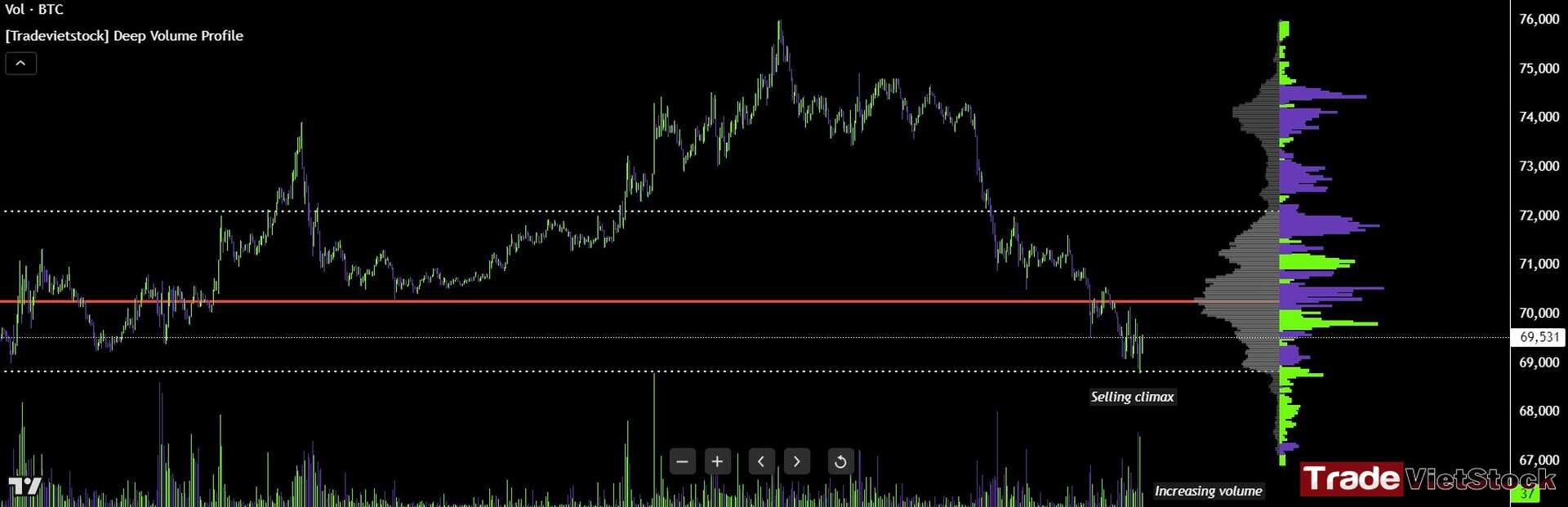
Price then rebounds sharply to form the automatic rally (AR), which defines the upper boundary of the trading range. Afterward, price revisits the lower levels, sometimes dropping slightly below the previous low in what is known as a secondary test (ST).
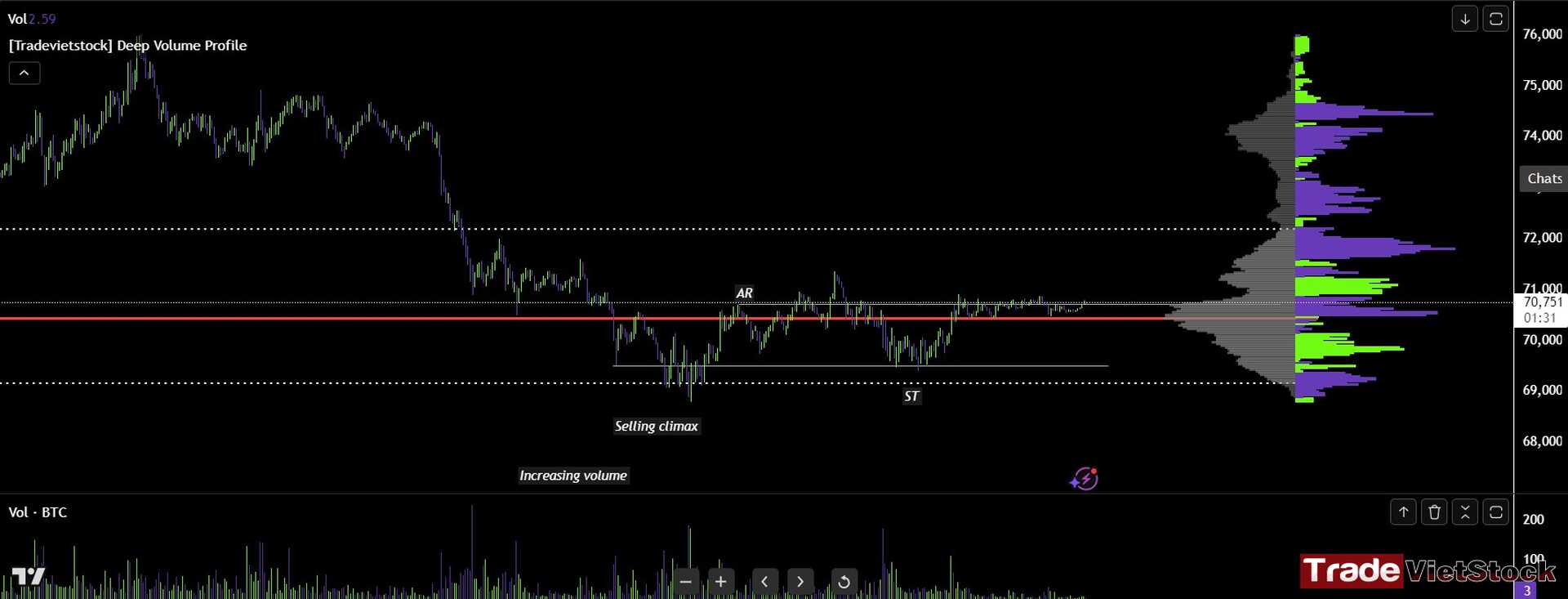
In Phase B, the market enters a consolidation period. Multiple secondary tests may occur as price moves within the range. This phase represents continued accumulation by institutional participants.
Typically, upward moves from the SC–ST area are supported by stronger volume, while pullbacks from the AR level show declining volume. This behavior suggests that selling pressure is gradually diminishing, preparing the market for the next phase.
Phase C involves a critical test of supply. Large participants assess whether significant selling pressure remains. During this stage, price movements may appear cautious, as the market checks for any remaining sellers.
If supply is limited, price begins to move higher and eventually breaks above the AR level, creating a sign of strength (SOS). This is often followed by a pullback to the last point of support (LPS).
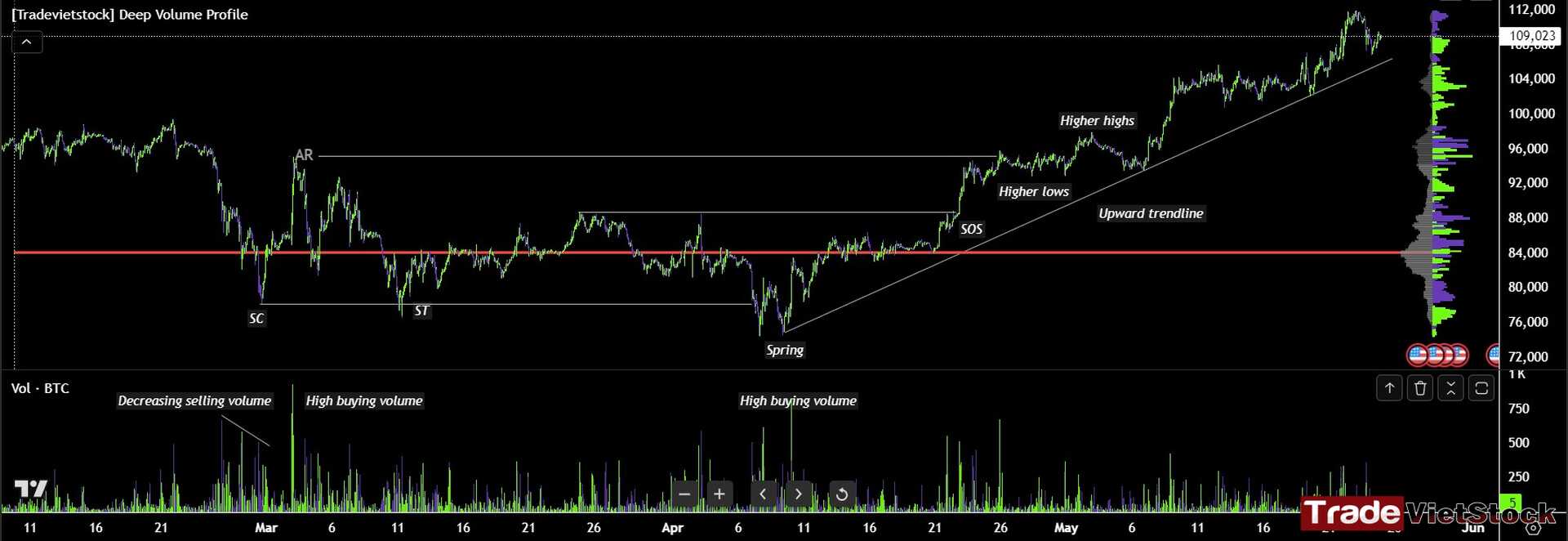
Phase D confirms that demand has taken control. Price continues to hold above previous resistance levels, and the LPS is often viewed as a favorable area for entering long positions.
Finally, in Phase E, price exits the trading range and enters the markup phase, beginning a sustained upward trend.
iii. How to Use Wyckoff In Trading For Traders
You can’t use Wyckoff in trading blindly because not every accumulation structure results in a strong rally, especially in the crypto market. External events can disrupt even well-formed setups.
For example, in early March 2020, Bitcoin showed signs of entering the SOS phase around $9,000. However, the market later dropped below $5,000 due to the global impact of the COVID-19 pandemic, invalidating the bullish structure.
One approach is to trade within the trading range. Traders may consider entering long positions near the ST zone, targeting the AR level. In this case, a stop-loss can be placed below the ST to limit risk if the setup fails.
For more aggressive strategies, traders may wait for confirmation before entering. This can include a breakout above resistance supported by strong volume, often aligned with fundamental catalysts.
A notable example occurred between May and November 2021, when Bitcoin broke out of an accumulation range around $37,000 and eventually reached nearly $69,000. This move was supported by favorable macro conditions and increasing adoption.
More conservative traders may prefer to wait until Phase D is clearly established. Entering after a confirmed breakout above the SOS level, with strong participation, can reduce the risk of false signals. In this case, placing a stop-loss below the breakout level helps manage potential downside risk.
iv. Final Note
Wyckoff in trading for traders provides a structured way to analyze how large participants build positions before a trend. However, it should not be treated as a guaranteed signal. Market conditions and external factors can always influence price behavior.
As with any trading approach, proper risk management and independent analysis remain essential.
v. Wyckoff In Trading Quiz
- What is the main purpose of the accumulation phase in Wyckoff theory?
A. To mark the beginning of a downtrend
B. To distribute assets to retail traders
C. To allow large players to build positions before a markup
D. To create volatility for short-term traders - Who developed the Wyckoff method?
A. Richard Wyckoff
B. Charles Dow
C. John Bollinger
D. Ralph Nelson Elliott - Which phase comes immediately after accumulation in the Wyckoff cycle?
A. Markdown
B. Distribution
C. Markup
D. Re-accumulation - What does a “selling climax” represent?
A. Strong buying pressure entering the market
B. The peak of panic selling where large players absorb supply
C. A continuation of a strong downtrend
D. A confirmed breakout - During accumulation, why does price often move sideways?
A. Lack of interest from traders
B. Market manipulation only
C. Large players are absorbing supply within a range
D. Indicators are lagging - What is the purpose of a “secondary test” (ST)?
A. To confirm a breakout
B. To retest resistance levels
C. To check if selling pressure still exists near support
D. To trap buyers above resistance - What does decreasing selling volume during pullbacks suggest?
A. Sellers are gaining control
B. Demand is weakening
C. Selling pressure is being exhausted
D. The trend is reversing immediately - What is the main goal of large institutions during accumulation?
A. To create short-term volatility
B. To push price lower continuously
C. To quietly build positions without moving price too much
D. To trigger retail stop-losses only - A trader buying near the lower range of accumulation is expecting what?
A. Immediate breakout
B. Continued downtrend
C. Rotation back toward the upper range
D. Market collapse - What is a more conservative entry approach in Wyckoff trading?
A. Buying randomly inside the range
B. Entering after price breaks above resistance with strength
C. Selling at support
D. Trading without confirmation - Why can Wyckoff setups fail in crypto markets?
A. Because the theory is outdated
B. Because crypto has no structure
C. Due to external factors like news or macro events
D. Because accumulation never works - What is the key idea behind using Wyckoff in trading?
A. Predict exact price levels
B. Follow indicators blindly
C. Understand how supply and demand shift over time
D. Trade only breakouts
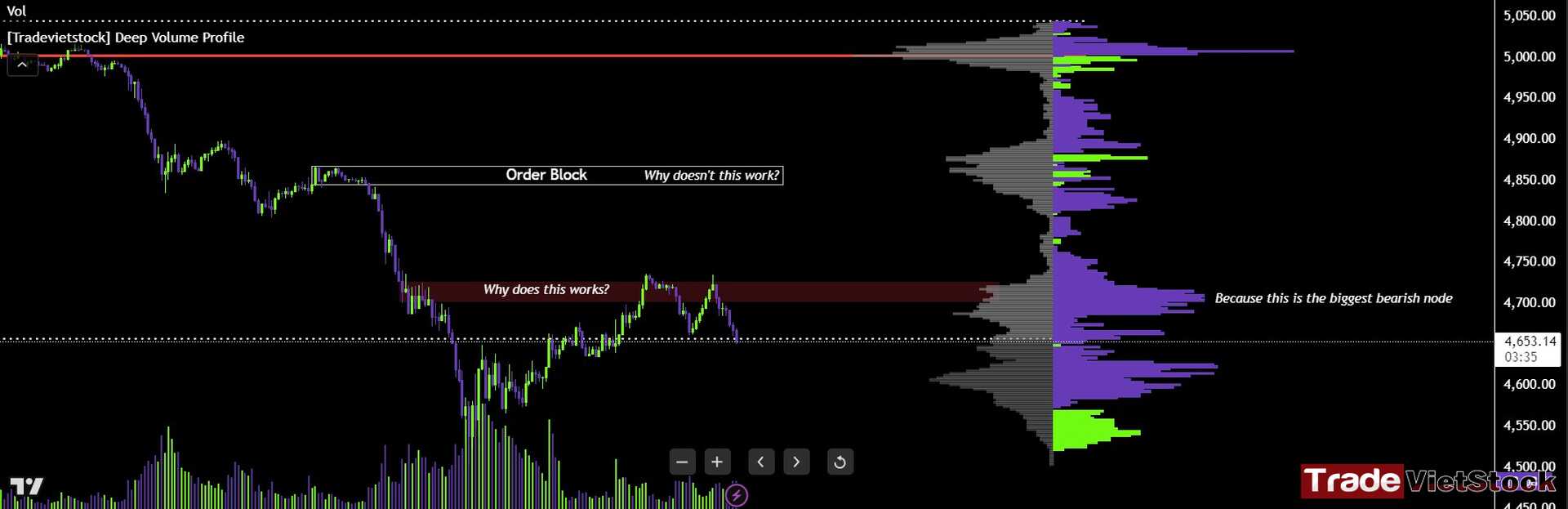
If you want to use the indicator in the image above, click this link right here? Download this algo trading indicator, apply it to your charts, and start seeing the market for what it truly is: a battle of liquidity.
[Link to register for a free Exness trading account]
[Link to register for a free XTB trading account]
You can also experience world-class services and trusted reputations from some of the top 5 crypto exchanges:
- Binance — The largest crypto exchange on Earth
- Bybit — A well-established name known for its long-standing reputation and diverse financial instruments
- Bitget trading account — User-friendly interface combined with a strong reputation
- MEXC trading account — The lowest trading fees with one of the most beginner-friendly interfaces
- OKX — A major name known for secure asset storage and powerful DEX tools




I got cured of my herpes disease on June14th (2026) after just two weeks of using Doc. Kham herbal medicine. You’re just too real, Your herbal medicine is so effective in eradicating the Herpes simplex virus. You’re a great doctor, A very powerful African Herbalist Doctor you’re. God bless you for getting me cured and helping others as well, I’m so excited. I have just been cured from HSV….. Thank you so much my good doctor, You actually made me believe that herpes truly has a complete cure and the only cure is Herbal Remedy of which I used and my whole story changed. You’re indeed a blessing to mankind, and your herbal medicine works so effectively. I’m so happy Everything is natural in your making and you never look fake because you always do your things with proofs and facts. You’re indeed legit and I’m so happy to be cured of my long term herpes Virus by your herbal medicine. Contact Doc Kham on his Email dr.khamcaregiver@ gmail. com and His Website is herbalistdrkhamcaregiver. simdif. com/